Rocket Launch Today: SpaceX, Cape Canaveral, and What We Know
Generated Title: Space Coast Soars: 100 Launches in a Year – Is This the New Normal, or Just a Peak?
The Century Mark: A Launch Boom Like No Other
One hundred launches from Florida's Space Coast in a single year. Let that sink in. The Falcon 9 Starlink mission marks 100th launch of the year from Florida’s Space Coast – Spaceflight Now report confirms the milestone, with the Starlink 6-78 mission from Kennedy Space Center sealing the deal. We're talking about a rate unseen since, well, pretty much never. Until 2020, the annual launch rate twice exceeded 25. Now, we're quadrupling that?
SpaceX, predictably, is the driving force. Ninety-three of those 100 launches are attributed to the Falcon 9. ULA chipped in five, and Blue Origin added two with the New Glenn. The Eastern Range now accounts for over a third of all orbital launches globally in 2025. That's a concentration of activity that demands a closer look.
The question isn't just how they did it, but can they keep doing it? And more importantly, should they?
Drilling Down: The Falcon 9 Factor
The Falcon 9's reusability is the obvious game-changer. Booster B1080, used in the Starlink mission, was flying for the 23rd time. That's not just impressive; it's a fundamental shift in launch economics. Each launch costs less when you're not throwing away a multi-million dollar rocket stage.
But let's not get carried away with the techno-utopianism. What about the wear and tear? Twenty-three flights is a lot of stress on a single piece of hardware. What are the long-term maintenance costs associated with that kind of reuse? Are we simply deferring expenses, trading short-term gains for longer-term liabilities? (I've seen companies do that before, and it never ends well.)
And what about the payloads themselves? The Transporter-15 mission, launched from Vandenberg, carried over 100 satellites. Many of these are smallsats, cubesats, and tech demos. What percentage of these actually achieve their intended mission objectives? Is this a case of quantity over quality?
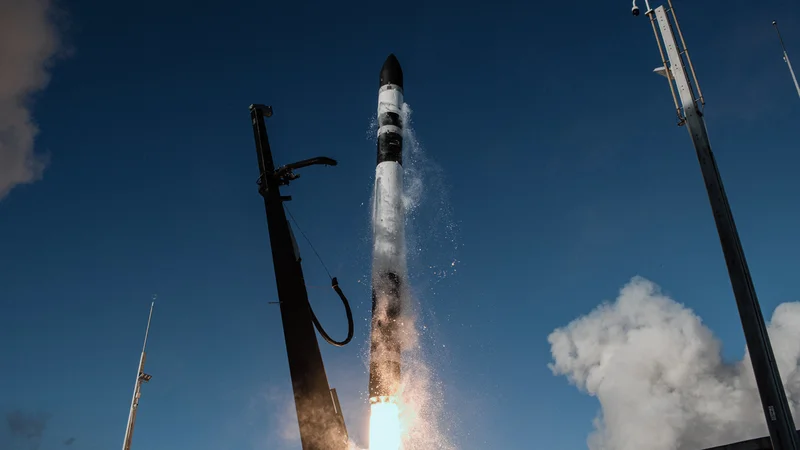
I wonder if the sheer volume of launches is masking some underlying inefficiencies. Are we launching a hundred satellites when twenty carefully designed and rigorously tested ones would do the job better?
A Few Clouds in the Sky
The increase in launches has undeniably opened up opportunities for various organizations. The ESA is launching its HydroGNSS satellites, Taiwan is deploying Earth-imaging and IoT testbeds, and Planet Labs is expanding its Earth-observation network. That's all good stuff.
But there's a potential downside. The Space.com article notes that data on many Transporter-15 payloads is "yet to be released," and the mission's full manifest won't be known until after the launch. That lack of transparency is concerning. Are we truly tracking all of these objects in orbit? Do we have a clear understanding of their potential impact on space debris and collision risk?
The weather, too, can't be ignored. The 45th Weather Squadron predicted a greater than 95% chance of favorable weather for the Starlink launch, but the Space Coast is still vulnerable to hurricanes and other disruptions. How will launch cadence be affected during storm season? What contingency plans are in place to minimize delays and backlogs?
Is it Sustainable?
The Space Coast has hit a major milestone, but it's critical to maintain a balanced perspective. We need to look beyond the headline numbers and examine the underlying factors driving this launch boom. Are we building a sustainable space economy, or are we simply creating a bubble that's destined to burst?
I've looked at hundreds of these filings, and this increased cadence is both impressive and concerning.
So, Are We Witnessing a Paradigm Shift, or Just a Statistical Anomaly?
The Space Coast's achievement is undeniable, but long-term sustainability remains the key question. We need more data on payload performance, maintenance costs, and orbital debris mitigation before we can declare this a true "new normal." For now, I'm cautiously optimistic, but I'm keeping a close eye on the numbers.
Related Articles

LAX: What it *really* means, navigating the chaos, and those brutal wait times
The Golden Age of Travel: A Civility Campaign or Just More BS from the DOT? Alright, let’s talk abou...

USPS Launches Informed Delivery App: A Sign of Government Innovation as FEMA Halts Preparedness Grants
The Last Mile, Digitized: Why the New USPS App is More Than Just Package Tracking There's a strange,...

The 'Giant' Designation: Unpacking the True Scale and Market Substance
The Human Shield: iHeart's Bold Stance in an AI World iHeartMedia, a behemoth in the radio landscape...

MANTRA: Why This AI Isn't Just an Upgrade—It's a New Beginning
I spend my days tracking exponential curves. I map the blistering trajectory of processing power, th...

Asia: The Best Destinations in 2026 and What We Know
Erbil: More Than Just a Dot on the Map – It's a Glimpse of Tomorrow Asia. It's a continent that's al...

Nairobi Official Collapses: What Happened?
Alright, let's dissect this Nairobi situation. A senior county official, Geoffrey Mosiria, supposedl...